

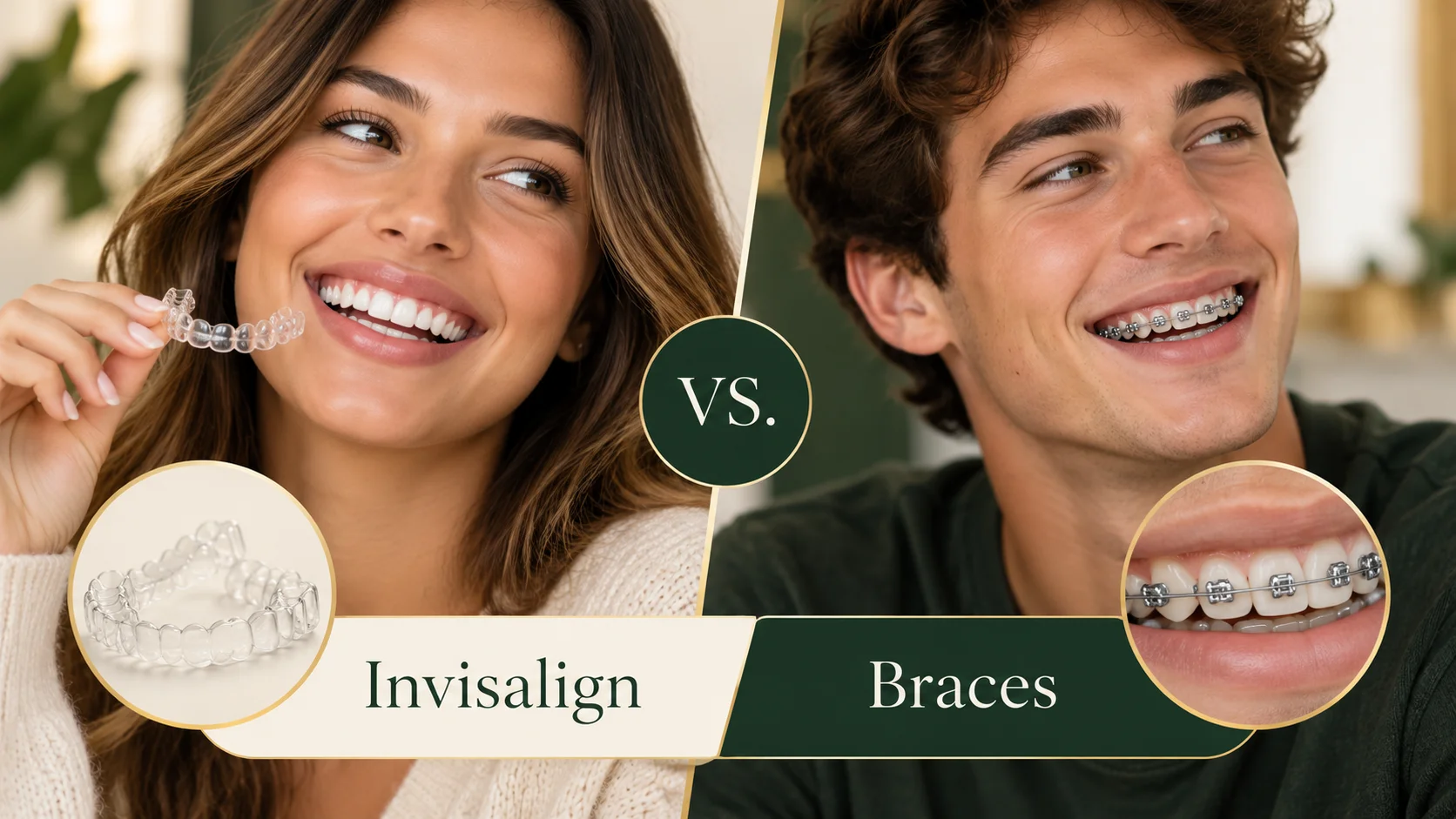
When comparing Invisalign vs braces in Burlington, NC, understanding the differences between these orthodontic treatments is essential. Both options can straighten teeth, improve bite alignment, and help create a healthier, more confident smile. However, each offers unique advantages depending on your orthodontic needs, lifestyle, and personal preferences.
At Daly Orthodontics in Burlington, NC, board-certified orthodontist Dr. Ivette Daly helps children, teens, and adults understand their treatment options through personalized evaluations and advanced digital technology.
Whether you’re considering clear aligners or braces, this guide explains the key differences, including appearance, comfort, daily routines, treatment time, and cost.
Invisalign vs. Braces: The Quick Answer
Invisalign may be a good choice for patients who prefer a discreet, removable orthodontic appliance and can consistently follow daily wear instructions. Traditional braces may be preferable for patients who want a fixed appliance or whose tooth movements and bite concerns are better addressed with braces.
Neither treatment is automatically better for everyone. The right option depends on your diagnosis, the complexity of your case, your preferences, and your orthodontist’s recommendation.
At Daly Orthodontics, your first consultation is free, giving you the opportunity to explore suitable treatment options before making a decision.
Invisalign vs. Braces: Side-by-Side Comparison
Understanding the practical differences can make it easier to prepare for an orthodontic consultation.
| Feature | Invisalign Clear Aligners | Traditional Braces |
|---|---|---|
| Appearance | Nearly invisible clear aligners | Visible brackets and wires |
| Removable | Yes, for meals and oral hygiene | No, fixed to the teeth |
| Eating | Aligners removed before eating | Certain hard, sticky, and chewy foods should be avoided |
| Daily care | Brush and floss normally after removing aligners; clean aligners separately | Brush and floss carefully around brackets and wires |
| Treatment routine | Requires consistent daily wear | Works continuously while attached |
| Comfort | Pressure or tenderness can occur when changing aligners | Pressure, tenderness, or irritation may occur after placement and adjustments |
| Treatment scope | Suitable for many alignment and bite concerns, depending on the case | Versatile for a broad range of alignment and bite concerns |
| Treatment time | Depends on diagnosis, complexity, and aligner wear | Depends on diagnosis, complexity, and treatment response |
| Cost | Based on your personalized treatment plan | Based on your personalized treatment plan |
| After treatment | Retainers are typically needed | Retainers are typically needed |
The most important difference is not simply how the appliances look. It is which treatment can achieve the planned tooth movements effectively and which daily routine you can realistically maintain.
How Does Invisalign Work?
Invisalign uses a series of custom-made, transparent aligners that apply controlled pressure to gradually move teeth into their planned positions.
Unlike fixed braces, Invisalign aligners can be removed for meals, brushing, and flossing. This flexibility is appealing to many adults and teenagers who want orthodontic treatment that is less noticeable during everyday activities.
However, Invisalign requires commitment. Aligners typically need to be worn 20–22 hours per day, or according to your orthodontist’s specific instructions. Removing them too frequently can interfere with the treatment plan.
At Daly Orthodontics, Dr. Daly uses iTero digital scanning to evaluate patients and help plan eligible Invisalign treatments.
Advantages of Invisalign
- Discreet appearance: Clear aligners are less noticeable than conventional metal braces.
- Removable design: Take aligners out for meals, brushing, and flossing.
- Flexible daily routine: No fixed brackets or wires when eating.
- Digital planning: 3D scans help support personalized treatment planning.
- Options for different ages: Eligible patients may benefit from Invisalign, Invisalign Teen, or Invisalign First.
What Should You Consider Before Choosing Invisalign?
Invisalign works best when patients follow the prescribed wear schedule and take proper care of their aligners.
Aligners should be removed before eating, and teeth should be cleaned as directed before reinserting them. Some patients also need tooth-colored attachments or other treatment aids to achieve the required movements.
Invisalign can treat many orthodontic concerns, but not every case is equally suited to clear aligner treatment. A professional evaluation is necessary to determine whether Invisalign can meet your treatment goals.
Explore our Invisalign treatment options in Burlington, NC.
How Do Traditional Braces Work?
Traditional braces use brackets attached to the teeth and an orthodontic archwire to apply controlled forces that gradually improve tooth positioning.
Because braces remain attached throughout treatment, they do not depend on the patient remembering to wear a removable appliance. This can be helpful for patients who prefer a fixed treatment method.
Braces can be used to address a wide range of orthodontic concerns, including crowding, spacing, and many bite-related problems. Treatment may also involve elastics or additional appliances, depending on the diagnosis.
At Daly Orthodontics, patients can choose from several braces options based on their needs and preferences.
Advantages of Braces
- Fixed treatment: Brackets remain attached throughout the active treatment period.
- Versatile correction: Braces can address many types of tooth alignment and bite problems.
- Different appearance options: Patients can explore metal, ceramic, or champagne-colored brackets.
- Suitable for different ages: Braces may be appropriate for children, teenagers, and adults.
- Personalized adjustments: Your orthodontist can modify the treatment approach as your teeth move.
What Should You Consider Before Choosing Braces?
Because brackets and wires stay attached to the teeth, patients need to take additional care when brushing and flossing.
Certain foods, particularly hard, sticky, or chewy items, can damage braces. Temporary tenderness after adjustments or irritation from brackets may also occur.
Regular orthodontic visits and following care instructions remain important throughout treatment.
Explore our braces options at Daly Orthodontics in Burlington, NC.
Invisalign vs. Braces for Adults: Which Option Fits Your Lifestyle?
For adults considering orthodontic treatment in Burlington, appearance and convenience are often important factors.
Invisalign for adults may appeal to people who prefer a less noticeable appliance during work, meetings, and social activities. The ability to remove aligners for meals and oral hygiene can also be convenient.
However, adults with more involved bite concerns or specific tooth movement requirements may benefit from braces or another treatment approach.
Braces for adults remain a practical option for patients who prefer not to manage removable aligners or who need a particular type of orthodontic correction.
There is no universal age limit for exploring orthodontic treatment. The health of your teeth and gums, your treatment goals, and your clinical evaluation are more important than age alone.
Dr. Daly can discuss the advantages and limitations of each option during your initial consultation.
Invisalign Teen vs. Braces: What Should Parents Consider?
When choosing orthodontic treatment for teenagers, parents should consider more than appearance.
Invisalign Teen may be suitable for teens who can consistently wear their aligners as directed and keep track of them during school, sports, and other activities.
Braces may be preferable for teenagers who would rather have a fixed appliance or whose orthodontic needs are better addressed with brackets and wires.
Parents may want to discuss:
- Their teen’s orthodontic diagnosis and treatment goals.
- Whether removable aligners would fit their daily habits.
- Activities such as sports, music, and school routines.
- Cleaning requirements and maintenance.
- Treatment expectations, costs, and follow-up visits.
At Daly Orthodontics, Dr. Daly offers personalized recommendations to help families understand which options are clinically appropriate.
What About Invisalign First and Early Orthodontic Treatment?
Children do not always need to wait until all their permanent teeth have erupted before having an orthodontic evaluation.
The American Association of Orthodontists recommends a first orthodontic checkup by age seven. This allows an orthodontist to assess developing teeth, jaw growth, spacing, and bite relationships.
Not every child needs treatment at that age. Many simply benefit from monitoring.
For eligible younger patients, Invisalign First may be one possible treatment option. In other situations, braces, other orthodontic appliances, or continued observation may be more appropriate.
Families in Burlington, Graham, Elon, Mebane, and surrounding communities can visit Daly Orthodontics for an individualized early orthodontic assessment.
Invisalign vs. Braces for Crowding, Gaps, and Bite Problems
Both Invisalign and braces can address different alignment concerns, but suitability depends on the details of each case.
Crowded Teeth
Crowding occurs when there is insufficient space for teeth to align properly. Some cases can be treated with clear aligners, while others may require braces, additional space-management techniques, or a different orthodontic plan.
Gaps Between Teeth
Spaces between teeth can sometimes be corrected with either Invisalign or braces. The position of the teeth, bite relationships, and underlying causes of the spaces influence treatment decisions.
Overbite and Underbite
Bite concerns involve how the upper and lower teeth meet. Depending on the diagnosis and severity, treatment may involve aligners, braces, elastics, or other orthodontic appliances.
Crossbite and Open Bite
These conditions require careful assessment because the most appropriate approach can depend on tooth position, jaw relationships, growth, and other clinical factors.
An in-person orthodontic evaluation is the best way to determine which treatment is suitable for your particular concern.
Which Is More Comfortable: Invisalign or Braces?
Both Invisalign and braces can cause temporary pressure or tenderness as teeth begin to move.
With Invisalign, some patients notice pressure when they begin wearing a new set of aligners. With braces, tenderness may occur after placement or adjustments, and brackets or wires may occasionally irritate the cheeks or lips.
Comfort varies from person to person. Invisalign does not guarantee a pain-free experience, and braces are not necessarily uncomfortable throughout treatment.
Your orthodontic team can provide appropriate guidance for managing common discomfort and recognizing when an adjustment or evaluation may be needed.
Is Invisalign Faster Than Braces?
Invisalign is not automatically faster than braces, and braces are not automatically faster than Invisalign.
Treatment duration depends on factors such as:
- The complexity of the alignment or bite problem.
- The tooth movements required.
- Growth and individual treatment response.
- The appliances and techniques selected.
- Following instructions, including aligner wear or elastic use.
- Attending recommended follow-up appointments.
Some cases may have similar timelines with either treatment. Others may be better suited to one method.
During your consultation, Dr. Daly can explain the anticipated treatment process and provide an individualized estimate based on your evaluation.
Invisalign vs. Braces Cost in Burlington, NC
Cost is an important consideration when comparing orthodontic treatments.
There is no single price that applies to every Invisalign or braces patient. The total cost depends on the complexity of the case, the recommended treatment, expected duration, and other services included in the treatment plan.
Invisalign is not always more expensive than braces, and braces are not automatically the lower-cost option.
At Daly Orthodontics, our team can help you understand the costs associated with your recommended treatment and discuss available financial arrangements.
Depending on eligibility and applicable terms, options may include:
- Dental insurance benefits.
- Eligible HSA or FSA funds.
- Available payment plans.
- Third-party financing options.
Because coverage and payment arrangements vary, the best way to receive accurate pricing is to review your specific plan during a consultation.
Schedule a free initial orthodontic consultation to discuss Invisalign, braces, and payment options.
Maintaining Results: Why Retainers Matter After Both Treatments
Whether you finish treatment with Invisalign or braces, keeping your teeth in their new positions is an essential part of orthodontic care.
Retainers help maintain the results of active orthodontic treatment. Without appropriate retention, teeth can shift over time.
Your orthodontist will recommend a retainer type and wear schedule based on your individual situation.
Daly Orthodontics offers retainer care and a Retainer Membership program designed to help eligible patients manage replacement needs.
Orthodontic treatment is not only about achieving a straighter smile; it is also about understanding how to help maintain the result.
Why Compare Invisalign and Braces at Daly Orthodontics?
Choosing an orthodontic treatment should begin with a thorough evaluation, not a one-size-fits-all recommendation.
At Daly Orthodontics in Burlington, NC, Dr. Ivette Daly provides specialized, board-certified orthodontic care for patients exploring Invisalign and braces.
Our practice offers:
Board-Certified Orthodontic Expertise
Dr. Daly is certified by the American Board of Orthodontics and has completed specialized postgraduate orthodontic training.
Invisalign and Braces Options
Patients can explore Invisalign, Invisalign Teen, Invisalign First, traditional metal braces, clear ceramic braces, and Iconix Gold Braces, based on clinical suitability.
Advanced Digital Technology
iTero digital scanning and other appropriate diagnostic tools support individualized orthodontic evaluations and treatment planning.
Personalized Care for Different Ages
Children, teens, and adults can receive recommendations suited to their dental development, alignment concerns, and smile goals.
Bilingual Orthodontic Care
Dr. Daly speaks English and Spanish, helping patients and families discuss their treatment options in their preferred language.
Free Initial Consultation
Patients can learn more about their orthodontic needs, available treatments, and financial options before deciding how to proceed.
Invisalign and Braces Near Graham, Elon, and Mebane, NC
Daly Orthodontics is located in Burlington, North Carolina, and welcomes patients from neighboring communities, including Graham, Elon, Mebane, Gibsonville, Haw River, and surrounding areas.
If you’re looking for Invisalign or braces near one of these communities, our Burlington office offers access to personalized orthodontic evaluations and treatment planning with Dr. Daly.
Patients can contact our team for directions, appointment information, and help planning their first visit.
Frequently Asked Questions About Invisalign vs. Braces
1. Is Invisalign better than braces for straightening teeth?
Neither option is universally better. Invisalign may be appropriate for patients who prefer removable clear aligners, while braces may be preferable for certain orthodontic needs or for patients who want a fixed appliance. Your orthodontist should evaluate your teeth and bite before recommending treatment.
2. Can Invisalign fix the same problems as traditional braces?
Invisalign can address many tooth alignment and bite concerns, including some cases of crowding, spacing, and bite irregularities. However, not every case is equally suited to clear aligners. Braces may offer advantages for certain movements or more complex treatment needs. A personalized evaluation determines which options are appropriate.
3. Do Invisalign aligners need to be worn all day?
Invisalign aligners generally need to be worn approximately 20–22 hours per day, following your orthodontist’s specific instructions. They are typically removed for meals and oral hygiene. Consistent wear is important because the aligners can only move teeth as planned when they are being used correctly.
4. Are braces or Invisalign easier to maintain?
Each option has different maintenance requirements. Invisalign aligners can be removed for brushing and flossing, but they need to be cleaned and worn consistently. Braces remain attached, so patients must clean carefully around brackets and wires and avoid foods that could damage the appliances.
5. Is Invisalign or braces more affordable in Burlington, NC?
The cost of either treatment depends on the individual orthodontic plan. Invisalign is not necessarily more expensive than braces. At Daly Orthodontics, patients can discuss expected treatment costs, applicable insurance benefits, and available payment options during their free initial consultation.
6. Can adults get Invisalign or braces at Daly Orthodontics?
Yes. Daly Orthodontics provides orthodontic evaluations and treatment options for adults in Burlington, NC. Depending on their dental health and orthodontic needs, eligible adult patients may be candidates for Invisalign, traditional braces, clear ceramic braces, or Iconix Gold Braces.
7. Should teenagers choose Invisalign Teen or metal braces?
The decision depends on the teenager’s orthodontic needs and ability to follow treatment instructions. Invisalign Teen may appeal to teens who want removable, discreet aligners and can wear them consistently. Braces are fixed and may be more suitable for certain cases or routines. Dr. Daly can explain both options to patients and parents.
8. Will I need retainers after Invisalign or braces?
Yes, retention is an important part of maintaining orthodontic results after either treatment. Teeth can shift over time, so your orthodontist will recommend a retainer and a personalized wear schedule. Daly Orthodontics offers retainer care to help patients protect their smiles after active treatment.
9. Can I switch from Invisalign to braces during treatment?
In some situations, an orthodontist may recommend modifying the treatment approach, which could include switching appliances. Whether that is appropriate depends on the clinical circumstances, progress, and treatment goals. Additional treatment costs or changes to the plan may apply.
10. Where can I compare Invisalign and braces near Graham, Elon, or Mebane, NC?
Patients from Graham, Elon, Mebane, and other nearby communities can visit Daly Orthodontics in Burlington, NC. Dr. Ivette Daly offers personalized orthodontic evaluations, allowing patients to understand their options and discuss whether Invisalign or braces may be suitable.
The Best Orthodontic Treatment Starts With the Right Diagnosis
The decision between Invisalign and braces should be based on more than appearance or convenience.
Both treatments can help improve tooth alignment and bite function when appropriately selected and managed. What matters most is understanding your orthodontic needs and choosing a treatment plan that fits your goals and daily routine.
At Daly Orthodontics, Dr. Ivette Daly and her team are ready to help you explore your options with personalized care, advanced technology, and clear communication.
Book Your Free Consultation
Daly Orthodontics
3814 Rural Retreat Road, Suite 101
Burlington, NC 27215
Phone: (336) 265-7212
Serving Burlington, Graham, Elon, Mebane, and surrounding North Carolina communities.