

Orthodontic Treatment (Braces)
A malocclusion is an incorrect relationship between the maxilla (upper arch) and the mandible (lower arch), or a general misalignment of the teeth. Malocclusions are so common that most individuals experience one, to some degree. The poor alignment of the teeth is thought to be a result of genetic factors combined with poor oral habits, or other factors in the early years.
Moderate malocclusion commonly requires treatment by an orthodontist. Orthodontists are dentists who specialize in the treatment of malocclusions and other facial irregularities.
The following are three main classifications of malocclusion:
- Class I – The occlusion is typical, but there are spacing or overcrowding problems with the other teeth.
- Class II – The malocclusion is an overbite (the upper teeth are positioned further forward than the lower teeth). This can be caused by the protrusion of anterior teeth or the overlapping of the central teeth by the lateral teeth.
- Class III – Prognathism (also known as “underbite”) is a malocclusion caused by the lower teeth being positioned further forward than the upper teeth. An underbite usually occurs when the jawbone is large or the maxillary bone is short.
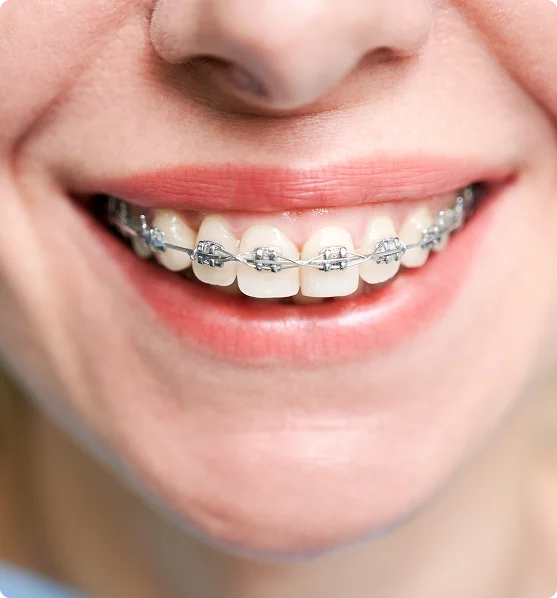
Reasons for orthodontic treatment (braces) adults & children:
- Breathing or swallowing problems – Mouth breathing can lead to snoring and sleep apnea.
- Crossbite – One or more upper teeth bite inside the lower teeth (towards the tongue).
- Crowding – Involving extra teeth or malpositioned teeth.
- Deep Overbite – The lower front teeth bite into the upper tissue of the upper teeth.
- Disfiguring of the face & mouth – Affects the development of the jaw and position of the teeth.
- Jaw & jaw joint pain
- Missing or extra teeth – Due to tooth decay, injuries, or inherited problems.
- Overjet (protruding upper teeth) – Upper teeth that protrude beyond normal and are usually associated with a short lower jaw.
- Self-image – An attractive smile can boost a person’s self-image and confidence.
- Spacing between teeth – Teeth are missing or may be too small or too large.
- Speech, chewing or biting problems
- Underbite (lower jaw protrusion) – Lower jaw is longer than the upper jaw.
Specific to children:
- Finger or thumb sucking – These habits can cause protrusion of the upper incisor teeth, and mouth breathing.
- Teeth erupting out of position – Can be guided to proper alignment.
What does orthodontic treatment involve?
Orthodontic treatment involves three phases:
1. Planning Phase – Your first couple of visits may include the following:
- A medical and dental history evaluation.
- Castings or “molds” of your teeth.
- Computer generated photograph of the head and neck that will aid in planning.
- Photographs of your face and mouth.
- X-rays of the teeth and jaws.
After careful planning, your orthodontist will design and apply braces or fabricate custom-made appliances for you.
2. Active Phase – Active treatment involves visiting your orthodontist on a regular basis for adjustments and following specific treatment requirements to ensure successful treatment.
3. Retention Phase – When treatment is completed, the braces and/or appliances are removed and a new appliance is made. Usually these retainers are removable and will maintain the changes made to your teeth if worn continuously until the teeth and bone are stabilized in their new positions.
Treatment and retention times vary depending on each individual case. Your orthodontist will ensure you have a successful treatment for a beautiful smile that can last a lifetime.